

What is VATS key? - Okey DoKey Locksmith
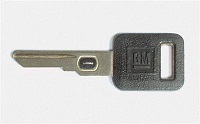 A VATS key is an automotive anti-theft key used on many older General Motors vehicles. VATS stands for Vehicle Anti-Theft System. These keys are easy to recognize by the small resistor pellet embedded in the metal blade.
The resistor is part of the vehicle's starting authorization system. When the key is inserted into the ignition, contacts inside the ignition lock read the resistance of the pellet. If the expected resistance is detected, the system permits the vehicle to start. An incorrect resistance can cause the anti-theft system to prevent starting.
Unlike a modern transponder key, the VATS key does not use a programmable transponder chip. To make a working replacement, you need the correct mechanical cuts and the correct VATS resistance.
Contents
What Is a VATS Key?
VATS stands for Vehicle Anti-Theft System. The system is also commonly associated with GM's PASS-Key security systems and was used on numerous General Motors vehicles.
The most distinctive feature of a VATS key is the visible resistor pellet embedded in the blade. The pellet is not simply decorative and should not be confused with the transponder chip contained inside many newer automotive keys.
There are 15 VATS resistance values. A replacement key must use the appropriate resistance value for the vehicle in addition to having the correct mechanical blade cuts.
How Does a VATS Key Work?
When a VATS key is inserted into the ignition, contacts in the ignition lock make contact with the resistor pellet on the blade. The VATS system reads the resistance and compares it with the value expected by the vehicle.
If the correct value is detected, the anti-theft system permits the normal starting process. If the resistance is incorrect or cannot be read, the system can prevent the vehicle from starting.
This is fundamentally different from a modern electronic transponder system. A VATS pellet has a fixed electrical resistance; it is not a chip that receives electronic programming.
VATS Key Codes
VATS keys are available with 15 different resistor values, commonly identified as VATS #1 through VATS #15.
The VATS number does not describe the mechanical cuts on the blade. Two keys can therefore have the same VATS resistance while having completely different blade cuts.
Likewise, a key can be mechanically cut correctly and turn the ignition but still fail to start the vehicle if it contains the wrong resistor value.
How to Determine Your VATS Code
If you have a working VATS key, its resistor pellet can be measured with an ohmmeter. The meter measures the electrical resistance across the exposed contacts of the pellet.
The measured resistance can then be compared with a VATS resistance chart to identify which of the 15 VATS values corresponds to the existing key.
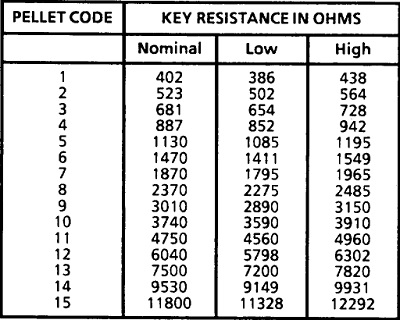
Because resistance readings may vary slightly from the nominal value, the measurement is compared with the appropriate VATS specification rather than expecting every used key to produce an absolutely identical meter reading.
6-Cut vs. 10-Cut VATS Keys
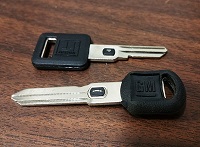
VATS keys were produced with different mechanical key systems. Two important versions are the older 6-cut VATS key and the later 10-cut VATS key.
The resistor pellet performs the same basic anti-theft function regardless of the mechanical blade style. However, the correct blank must match both the vehicle's mechanical key system and its required VATS resistance.
Different key-head styles and logos may also exist, so the appearance of the plastic head alone should not be used to identify the correct replacement.
Which Vehicles Use VATS Keys?
VATS was used on a variety of older GM vehicles, particularly models from Buick, Cadillac, Chevrolet, Oldsmobile, and Pontiac. Applications vary by model year.
Buick
- Buick LeSabre — 1992–1999
- Buick Park Avenue — 1991–1996
- Buick Reatta — 1990–1992
- Buick Regal — 1994–1997
- Buick Riviera — 1990–1993
- Buick Roadmaster — 1994–1996
Cadillac
- Cadillac Allante — 1987–1993
- Cadillac Concours — 1994–1999
- Cadillac DeVille — 1990–1999
- Cadillac Eldorado — 1989–2003
- Cadillac Fleetwood — 1993–1995
- Cadillac Seville — 1989–1997
Chevrolet
- Chevrolet Camaro — 1989–2002
- Chevrolet Caprice — 1995–1996
- Chevrolet Corvette — 1985–1990
- Chevrolet Impala — 1995–1996
- Chevrolet Lumina — 1994–2000
- Chevrolet Monte Carlo — 1994–1999
Oldsmobile
- Oldsmobile Cutlass — 1994–1996
- Oldsmobile Cutlass Supreme — 1994–1997
- Oldsmobile Eighty Eight — 1992–1999
- Oldsmobile LSS — 1997–1999
- Oldsmobile Ninety Eight — 1990–1996
- Oldsmobile Regency — 1991–1998
- Oldsmobile Toronado — 1990–1992
Pontiac
- Pontiac Bonneville — 1992–1999
- Pontiac Firebird — 1988–2002
- Pontiac Grand Prix — 1994–1996
- Pontiac Trans Am — 1988–2002
How to Duplicate a VATS Key
Duplicating a VATS key requires matching two separate characteristics: the mechanical key cuts and the resistance value of the pellet.
If you still have a working key, the existing blade can be used as a reference for the mechanical portion and the pellet can be measured to identify its VATS value. A replacement blank with the corresponding resistor value can then be cut for the vehicle.
The resistor itself is not programmed. Unlike a transponder key, a VATS blank is manufactured with a particular resistance value.
If you are making a backup while a working key is still available, see our duplicate car keys guide for additional information about spare automotive keys.
Common VATS Key Problems
A vehicle that refuses to start does not automatically have a bad VATS key. Problems can involve the key, the resistor pellet, the contacts that read it, wiring associated with the ignition lock, or another part of the starting system.
If the resistor pellet becomes dirty or damaged, the system may have difficulty obtaining the expected reading. Wear or problems with the contacts inside the ignition can produce similar symptoms.
A useful clue is whether another known working VATS key produces the same problem. If multiple correct keys fail in the same way, the problem may not be the key itself.
Because the resistor value is part of the vehicle's anti-theft system, simply cutting another mechanical key with the correct blade pattern does not necessarily solve a VATS-related starting problem.
What If All VATS Keys Are Lost?
If every VATS key has been lost, making a replacement involves identifying both the correct blade cuts and the required VATS pellet value. There is no existing key available to copy or measure.
An automotive locksmith or other qualified service provider may be able to identify the information necessary to originate a replacement. Vehicle ownership and identification information may be required before a key is produced.
The vehicle identification number (VIN) can help identify the vehicle, but the complete replacement procedure depends on the particular GM model and key system.
Okey DoKey Locksmith provides mobile car key replacement service for supported vehicles. Call (832) 408-0006 if you have lost your only VATS key and need a replacement at the vehicle.
VATS Key FAQ
Is a VATS key a transponder key?
No. A VATS key uses a fixed resistor pellet that is physically contacted and measured by the vehicle. A transponder key uses an electronic chip that communicates with the immobilizer system.
How many VATS key values are there?
There are 15 VATS resistance values. The replacement key must have the resistance value required by the vehicle.
Can a VATS key be programmed?
The resistor pellet itself is not programmed. The correct VATS blank is selected according to its fixed resistance value and the blade is cut to operate the vehicle's mechanical lock.
Can I determine the VATS number from my existing key?
Yes. If you have an existing VATS key, the resistor pellet can be measured with an ohmmeter and the reading compared with the VATS resistance values.
Can I make a spare VATS key?
Yes. If you still have a working key, making a spare VATS key is generally simpler because the existing key provides both a mechanical reference and a resistor value that can be identified.
