

Types of Residential Locks - Okey DoKey Locksmith
Residential locks come in many designs, and each serves a different purpose around the home. A lock that works well on a bedroom door may not provide the security you want for a front entrance, while cabinet, mailbox, and furniture locks are designed for entirely different applications.
Understanding the different types of residential locks can make it easier to choose appropriate hardware when replacing, upgrading, or rekeying locks. Below are some of the most common lock types found in and around residential properties.
Contents
Deadbolts
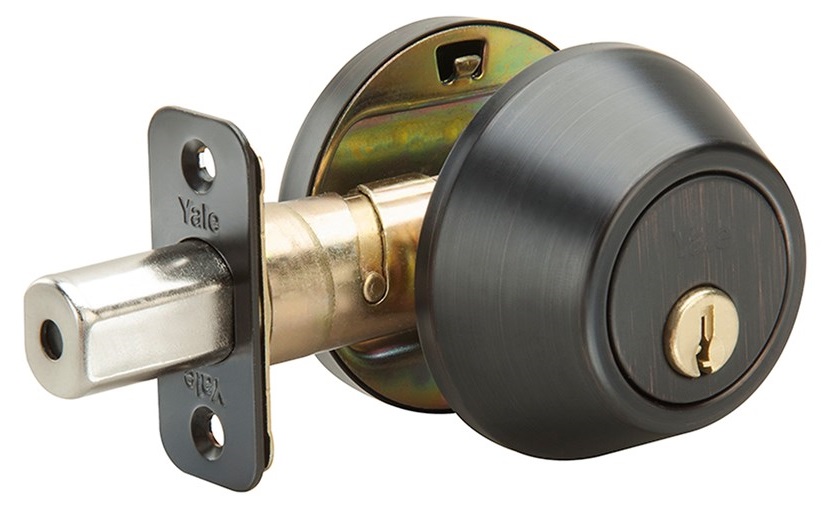 A deadbolt is one of the most common locks used to secure an exterior residential door. Unlike a spring latch, the bolt does not retract simply by applying pressure to the end of it. This makes a properly installed deadbolt an important part of exterior door security.
The most familiar design is the single-cylinder deadbolt. It has a key cylinder on the exterior and a thumbturn on the interior, allowing occupants to unlock the door from inside without a key.
A double-cylinder deadbolt uses a key on both sides. Although this can prevent someone from reaching through nearby broken glass and turning an interior thumbturn, requiring a key to exit can create a serious emergency-egress concern and may not comply with applicable building or fire codes. For residential use, lock selection should always account for safe emergency exit requirements.
Deadbolts are available in different grades, finishes, keyways, and designs. Many conventional residential deadbolts can also be rekeyed rather than completely replaced when the goal is simply to prevent an old key from working.
Knob Locks
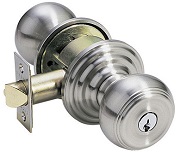 Knob locks are common on residential doors. The locking cylinder is incorporated into the knob assembly, and different versions are available for exterior entrances, bedrooms, bathrooms, closets, and passage doors.
On an exterior door, a locking knob is commonly paired with a deadbolt rather than being relied upon as the primary security lock. The deadbolt provides the main locking bolt, while the knob or latch hardware helps keep the door closed and provides normal operation of the door.
When replacing a knob lock, check the door's thickness, backset, bore dimensions, and handing requirements where applicable. Selecting hardware designed for the existing door preparation can make replacement considerably easier.
Lever Handle Locks
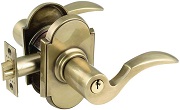 Lever locks operate similarly to many knob locks, but use a lever-style handle instead of a round knob. The lever is pushed downward to retract the latch and open the door.
Lever handles are frequently used because they can be easier to operate for children, older adults, and people who have difficulty gripping and turning a conventional doorknob. They are available in keyed entrance, privacy, passage, and other configurations.
Residential lever hardware can be used on both interior and exterior doors when the particular lockset is designed for that application. Exterior entrances are commonly supplemented by an appropriate deadbolt.
Mortise Locks
A mortise lock differs substantially from a standard cylindrical knob or lever lock. Its lock body fits into a rectangular pocket, or mortise, cut into the edge of the door.
Mortise locks combine several components inside the door and can include a latch bolt, deadbolt, cylinder, and other operating hardware. They are commonly associated with commercial buildings, but they are also found in older residential properties, apartment buildings, and homes with heavier or specialty doors.
Replacing a mortise lock requires attention to the existing door preparation and dimensions because mortise lock bodies are not necessarily interchangeable.
Rim Locks & Rim-Mounted Hardware
Rim locks are mounted primarily on the surface of a door rather than being installed entirely inside a bored opening. Traditional rim locks can still be found in older homes, while other forms of rim-mounted locking hardware are used for particular residential applications.
Another design sometimes encountered is the jimmy-proof deadbolt, which uses surface-mounted components on the interior side of the door. Whether this type of hardware is appropriate depends on the door, frame, existing preparation, and desired security level.
Smart Locks & Electronic Residential Locks
Modern residential security also includes electronic and smart locks. Depending on the model, these locks may allow entry using a keypad, PIN, smartphone, electronic credential, fingerprint, conventional key, or a combination of methods.
Some smart locks replace most of the existing lock hardware, while others operate an existing deadbolt. Features vary widely and can include temporary access codes, activity records, remote management, and integration with compatible home-automation systems.
When choosing a smart lock, consider the mechanical quality of the lock in addition to its electronic features. Battery requirements, emergency access, door compatibility, connectivity, and what happens when the electronics are unavailable are also important considerations.
Padlocks
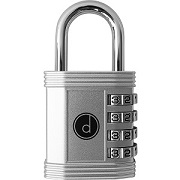 Unlike most residential door locks, a padlock is portable and is not permanently installed in a door. Padlocks are commonly used around homes for sheds, gates, storage containers, toolboxes, and similar applications.
Two common varieties are keyed and combination padlocks. A keyed padlock opens with a key, while a combination model uses a dial, wheels, or another combination mechanism.
Keyed padlocks may be rekeyable or non-rekeyable depending on their construction. Some are also key-retaining, meaning the key cannot be removed while the padlock is open.
Another variation is the shrouded-shackle padlock. The lock body extends around more of the shackle, reducing the amount of exposed shackle compared with a conventional open-shackle design.
Cam Locks
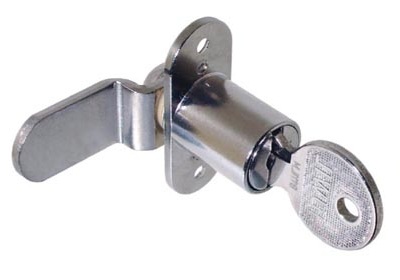 Cam locks are small locks commonly found on cabinets, drawers, storage compartments, and mailboxes. Turning the key rotates a metal piece called the cam behind the surface being secured.
Cam locks are available in different lengths and configurations to accommodate different cabinet, drawer, and enclosure designs. They are generally intended for these specialized applications rather than as substitutes for residential entry-door locks.
Furniture Locks
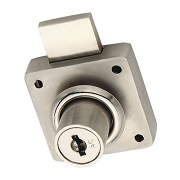 Furniture locks are designed for desks, cabinets, drawers, display furniture, and similar applications. Their construction varies depending on how the furniture opens and what needs to be secured.
Common designs include locks using a rotating or sliding bolt and push-style mechanisms that secure a drawer or cabinet when engaged. These locks are generally intended to provide controlled access to the contents of the furniture rather than the level of security expected from an exterior door lock.
Wall-Mounted Locks & Key Storage
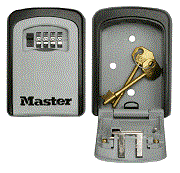 The term wall-mounted lock can refer to locking devices or secure key-storage boxes mounted directly to a wall or other fixed surface. These products are different from conventional door locks and are generally used for a specialized purpose, such as controlling access to keys or equipment.
Security varies considerably between products, so a wall-mounted lockbox should be selected according to where it will be installed, what it will contain, and how much physical protection is required.
Choosing the Right Residential Lock
There is no single lock that is ideal for every location in a house. A front entrance, bedroom, bathroom, mailbox, gate, and cabinet all have different requirements.
For an exterior door, consider the door and frame together rather than evaluating the lock by itself. A quality deadbolt cannot provide its intended level of security if the door, strike area, hinges, or frame are damaged or improperly installed.
If existing hardware is worn, damaged, or no longer appropriate for the door, a lock change allows the complete lock to be replaced. If the hardware is still in good condition and the main goal is to prevent old keys from operating it, rekeying may be sufficient.
For interior doors, privacy and convenience may matter more than resistance to forced entry. Bedrooms and bathrooms commonly use privacy locks, while closets and hallways may use passage hardware that does not lock at all.
Residential Lock FAQ
What type of lock is best for a front door?
A quality deadbolt is commonly used as the primary locking hardware on a residential exterior door, often together with a knob or lever latch. The appropriate hardware also depends on the door, frame, installation, and applicable building requirements.
What is the difference between a deadbolt and a knob lock?
A deadbolt extends a solid bolt into the strike when locked. A knob lock typically operates a spring latch and incorporates its locking mechanism into the knob assembly. Exterior doors commonly use both.
Should I replace my locks or rekey them?
If the existing locks operate properly and you simply need old keys to stop working, rekeying may be enough. Replacement may make more sense when the hardware is damaged, worn, outdated, or you want a different type of lock.
Are smart locks better than regular locks?
Smart locks can provide convenient electronic access features, but they are not automatically better for every home. Mechanical construction, installation, door compatibility, battery management, and the specific features you need should all be considered.
Can all residential locks be rekeyed?
No. Many conventional keyed cylinders are designed to be rekeyed, but not every lock is. Whether rekeying is possible depends on the particular lock and cylinder.
What locks should be used on interior doors?
Bedrooms and bathrooms commonly use privacy locks, while closets, hallways, and other doors that do not require locking commonly use passage hardware. The appropriate type depends on how the room is used.
