

Electric Strike Vs Magnetic Lock | Okey DoKey Locksmith
Electric strikes and magnetic locks are two common ways to control access through commercial doors. Both can work with electronic access-control systems, but they secure and release a door in very different ways.
An electric strike modifies the strike side of the door opening and works with compatible mechanical locking hardware. A magnetic lock, or maglock, uses an electromagnet and an armature plate to hold the door closed. Understanding these differences is important when choosing hardware for an entrance, office, controlled-access area, or other commercial opening.
Neither system is automatically better for every door. The right choice depends on the door and frame, existing hardware, access-control system, required operation during a power failure, emergency egress requirements, fire and building codes, and the level of security required.
Contents
What Is an Electric Strike?
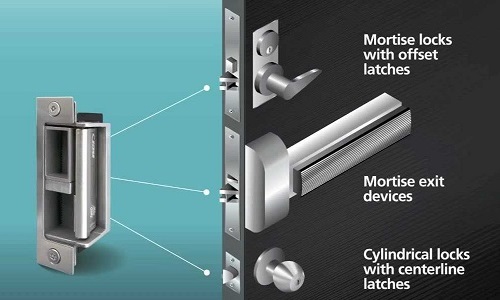 An electric strike is installed in the door frame where a conventional strike plate would normally be located. It works with compatible latch or lock hardware on the door.
When access is authorized, the electric strike changes state so the door can be opened without requiring the latch to be manually retracted from the outside. Authorization can come from an access-control system using a credential such as a card reader, keypad, or another compatible device.
One important advantage is that an electric strike can often be integrated with conventional mechanical door hardware. Depending on the particular opening, occupants may still operate the inside lever or panic hardware normally for egress.
Electric Strike Advantages
- Works with many types of mechanical locking hardware.
- Can integrate with card readers, keypads, and access-control systems.
- Available in different configurations for different doors and frames.
- Fail-safe and fail-secure configurations are available depending on the particular hardware.
- Can allow normal mechanical operation from the egress side when properly designed.
Electric Strike Disadvantages
- The door frame must be compatible with the strike.
- Installation may require modification of the frame.
- The strike must be matched correctly to the latch, lock, door, and frame.
- Fire-rated openings and exit doors can have additional hardware and code requirements.
What Is a Magnetic Lock?
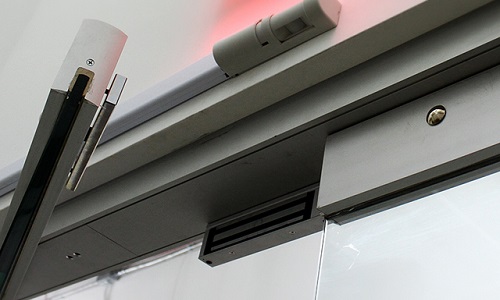 A magnetic lock uses an electromagnet mounted to the door frame and an armature plate mounted to the door. When electrical power is supplied to the magnet, it attracts the armature plate and holds the door closed.
Unlike an electric strike, a maglock does not depend on a latch engaging a strike. The holding force comes from the powered electromagnet.
When the magnet is properly released, the electromagnetic holding force disappears and the door can open. Because the lock depends on electricity to remain secured, its power and release arrangements are particularly important parts of the installation.
Magnetic Lock Advantages
- Uses relatively few moving mechanical components.
- Can provide substantial holding force when correctly installed.
- Works well with many electronic access-control systems.
- Can be useful on openings where an electric strike is not appropriate.
Magnetic Lock Disadvantages
- Requires electrical power to remain magnetically locked.
- Requires properly designed release and emergency-egress controls.
- Installation can affect the appearance and clearance around the top of the door.
- Door and frame alignment are important for full contact between the magnet and armature plate.
- Applicable building, fire, and life-safety requirements can make the installation more involved than simply mounting a magnet to a door.
Electric Strike vs. Magnetic Lock
| Feature | Electric Strike | Magnetic Lock |
|---|---|---|
| How It Secures the Door | Works with compatible mechanical latch or lock hardware | Electromagnet holds an armature plate |
| Typical Location | Door frame at the strike | Usually mounted at the upper door/frame area |
| Mechanical Latch | Typically used with one | Magnetic holding force does not require a latch |
| Power | Operation depends on strike configuration | Requires power to maintain magnetic holding force |
| Access Control | Can integrate with electronic access systems | Can integrate with electronic access systems |
| Egress | Depends on the complete lock and door-hardware configuration | Requires an appropriate release arrangement |
What Happens During a Power Outage?
One of the biggest differences between these two systems is how they can behave when electrical power is interrupted.
Magnetic locks require electricity to create their holding force. When power to the electromagnet is removed, the magnetic holding force is released. The complete access-control installation, however, may include additional equipment and backup power, so actual system behavior depends on how the opening is designed.
Electric strikes are available in different configurations. A fail-secure electric strike is designed so that loss of electrical power does not automatically electrically release the secured side, while a fail-safe configuration releases when power is removed.
This is why it is inaccurate to say that every electric strike remains locked during a power outage. The behavior depends on the particular strike and the requirements of the opening.
Emergency Egress & Life Safety
Electronic access control must never be considered separately from safe emergency egress. A door may need to satisfy building, fire, accessibility, and life-safety requirements in addition to providing security.
For example, an exterior door equipped with panic hardware may need to allow occupants to exit quickly without using a key, access credential, or special knowledge. A properly designed access-control system must preserve the required egress function.
Magnetic locking systems can have specific requirements governing how the lock releases. The required arrangement depends on the type of opening, occupancy, applicable code, fire-alarm integration, access-control design, and local authority requirements.
For this reason, an electric strike or magnetic lock should be selected as part of the complete door system, not simply according to which locking device appears stronger or easier to install.
Security Differences
Both electric strikes and magnetic locks can be used as components of a secure commercial access-control system. The security of either installation depends on considerably more than the locking device itself.
The door, frame, mounting hardware, access-control equipment, power supply, credential system, door closer, and installation quality all affect the performance of the opening.
An electric strike must be properly matched and aligned with the mechanical lock or latch. A magnetic lock depends on correct mounting and proper contact between the magnet and armature plate.
It is therefore misleading to assume that magnetic locks are inherently low-security simply because they do not use interlocking mechanical components, or that an electric strike is automatically the more secure choice. The entire door assembly should be evaluated.
Which Lock Should You Choose?
An electric strike can be a good option when the door already uses compatible mechanical locking hardware and electronic access needs to be added while retaining conventional door operation.
A magnetic lock may be appropriate when the opening and access-control design are better suited to electromagnetic locking. Its installation must include the appropriate power, release controls, and life-safety provisions.
There is generally no reason to install both an electric strike and a magnetic lock on the same exterior door simply because two locking devices appear more secure. Adding unnecessary locking hardware can complicate operation, emergency egress, access control, and code compliance.
A commercial locksmith can evaluate the existing door, frame, lock hardware, and access-control requirements before recommending an electric strike, magnetic lock, or another solution.
Electric Strike vs. Magnetic Lock FAQ
What is the main difference between an electric strike and a magnetic lock?
An electric strike works with compatible mechanical latch or lock hardware, while a magnetic lock uses electromagnetic force between a magnet and an armature plate to hold the door closed.
Does an electric strike unlock when the power goes out?
Not necessarily. Electric strikes are available in different configurations. Whether the secured side releases when electrical power is lost depends on the strike and how the opening is designed.
Does a magnetic lock work without electricity?
The electromagnet requires electrical power to produce its holding force. Removing power releases that magnetic holding force, although the complete door may contain other locking or access-control hardware.
Can an electric strike work with a card reader?
Yes. An electric strike can be incorporated into an access-control system in which an authorized credential causes the system to release the door.
Can a magnetic lock work with a card reader?
Yes. Magnetic locks are also commonly integrated with electronic access-control systems. The complete installation must include the appropriate controls for both authorized entry and required egress.
Which is better for a commercial door?
It depends on the opening. Door construction, existing hardware, access-control requirements, emergency egress, power-loss behavior, fire rating, and applicable codes should all be considered before selecting the locking hardware.
Should I install both a magnetic lock and an electric strike?
Normally, the goal is to select the locking system appropriate for the particular opening rather than automatically installing both. Unnecessary additional locking hardware can make the door and its emergency-release requirements more complicated.
