

What is Car ECU - Okey DoKey Locksmith
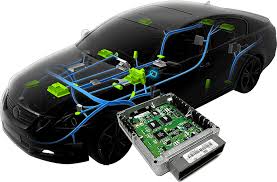 An ECU is an electronic control unit used to control and monitor functions in a vehicle. In automotive terminology, ECU may refer generally to an Electronic Control Unit, while in discussions about the engine it commonly refers to the Engine Control Unit or Engine Control Module (ECM).
Modern vehicles contain multiple electronic control modules. These computers receive information from sensors, process that information, and send commands to components throughout the vehicle. The engine ECU, for example, can manage fuel delivery, ignition timing, emissions-related functions, and other aspects of engine operation.
The ECU is also important in automotive locksmith work because the vehicle's immobilizer and key system may communicate with one or more electronic modules before the engine is authorized to start. This becomes particularly relevant when programming transponder keys and smart keys.
Contents
What Does ECU Mean?
ECU most commonly stands for Electronic Control Unit. It is a computer module responsible for controlling a particular electronic system within a vehicle.
When someone refers to "the ECU" in connection with engine operation, the term often means the Engine Control Unit. Depending on the manufacturer, similar terminology such as Engine Control Module (ECM) or Powertrain Control Module (PCM) may also be used.
A modern vehicle is essentially a network of electronic modules. The engine controller is only one part of that network.
How Does an ECU Work?
An ECU receives electronic information from sensors located throughout the vehicle. Its software processes that information and determines what commands should be sent to the systems it controls.
For example, the engine controller can receive information about engine speed, temperature, airflow, throttle position, and other operating conditions. It then uses programmed parameters to determine how the engine should operate.
This process takes place continuously while the vehicle is running. The ECU constantly receives information, makes calculations, and adjusts controlled components as operating conditions change.
What Does the Engine ECU Control?
The exact functions depend on the vehicle, but an engine ECU or related powertrain controller may be involved with:
- Fuel injection
- Ignition timing
- Engine idle control
- Throttle-related functions
- Emissions control
- Engine sensor monitoring
- Diagnostic trouble codes
- Communication with other vehicle modules
Many vehicles integrate additional functions into a Powertrain Control Module rather than using one computer exclusively for the engine.
Does a Car Have More Than One ECU?
Yes. Modern vehicles can contain numerous electronic control modules, each responsible for particular systems.
Depending on the vehicle, separate modules may control or participate in systems such as the engine, transmission, anti-lock brakes, airbags, body electronics, climate control, instrument cluster, doors, security system, and keyless entry.
These modules can communicate with one another over the vehicle's electronic network. Because of this interconnection, a problem involving one system can sometimes require diagnosis beyond a single component.
ECU, Immobilizers & Car Keys
The ECU becomes particularly relevant to automotive locksmiths because modern vehicles do not rely solely on the mechanical cuts of a key.
A transponder key contains electronic identification that must be accepted by the vehicle's immobilizer system. Depending on the vehicle architecture, the immobilizer, body control module, engine controller, or other security-related modules may exchange information before engine starting is authorized.
This is why a correctly cut key may turn the ignition but still fail to start the vehicle. The mechanical portion of the key can be correct while the electronic authorization is missing.
The same principle applies to many smart and proximity keys. The vehicle must recognize an authorized electronic key before allowing normal starting.
What Is the OBD Port?
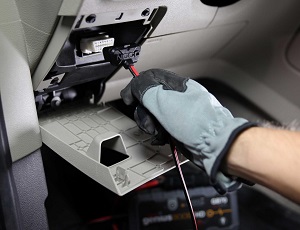
The OBD port is the vehicle's onboard diagnostic connector. OBD stands for On-Board Diagnostics. On modern passenger vehicles, the diagnostic connector is commonly located underneath or near the driver's side of the dashboard.
Compatible diagnostic equipment can connect to this port to communicate with vehicle systems, retrieve diagnostic information, read trouble codes, and perform supported service functions.
Automotive locksmith and key-programming equipment may also use the vehicle's diagnostic connection when performing supported immobilizer or key-registration procedures.
Connecting equipment to the OBD port does not automatically provide unrestricted access to every vehicle function. Available operations depend on the vehicle, diagnostic protocol, security system, equipment, and authorization procedures required by the manufacturer.
ECU vs. OBD
The ECU and OBD port are not the same thing. An ECU is an electronic module that controls or monitors vehicle functions. The OBD port is a diagnostic connection that allows compatible equipment to communicate with supported vehicle systems.
A simple way to think about the difference is that the ECU is one of the computers operating the vehicle, while the OBD connector provides a standardized access point for diagnostic communication.
Common ECU Problems
An ECU is only one part of a complicated electronic system, so a vehicle symptom should not automatically be blamed on a failed computer.
Electrical problems, damaged wiring, poor connections, low battery voltage, sensor failures, communication faults, immobilizer problems, and other components can sometimes produce symptoms that appear to involve an ECU.
Possible symptoms associated with an engine-management or communication problem can include warning lights, starting problems, poor engine operation, communication errors, or stored diagnostic trouble codes.
Proper diagnosis is important before replacing an expensive electronic control module.
ECU Replacement & Programming
Replacing an ECU is generally more involved than unplugging the old module and installing another one. Depending on the vehicle, a replacement module may require programming or configuration so that it works correctly with the vehicle.
Security-related information can make replacement more complicated. On some vehicles, the engine controller, immobilizer, keys, body control module, or other components contain information that must correspond before the vehicle will start.
For this reason, replacing a security-related electronic module can sometimes require additional initialization, key programming, or module synchronization.
If the problem is actually a lost or unrecognized key rather than a failed ECU, replacing the computer may not be necessary. An automotive locksmith can diagnose supported key and immobilizer situations and determine whether car key replacement or programming is the appropriate service.
ECU FAQ
What does ECU stand for in a car?
ECU generally stands for Electronic Control Unit. When discussing the engine specifically, ECU is also commonly used for Engine Control Unit.
Is the ECU the car's computer?
It is common to call the engine ECU the car's computer, but modern vehicles normally contain multiple computers or control modules rather than one computer controlling everything.
Is the ECU the same as the ECM?
The terminology varies. ECM generally means Engine Control Module, while ECU can mean Electronic Control Unit or Engine Control Unit depending on context. Manufacturers may also use terms such as PCM for Powertrain Control Module.
Does the ECU recognize the car key?
Modern vehicle starting authorization can involve communication between the key, immobilizer, engine controller, body control module, and other security-related electronics. The exact architecture depends on the vehicle.
Why can a key turn the ignition but not start the engine?
A transponder key has both mechanical and electronic requirements. The blade can be cut correctly and turn the ignition while an incorrect or unprogrammed transponder prevents the immobilizer system from authorizing the engine to start.
What is an OBD port?
The OBD port is an onboard diagnostic connector used by compatible equipment to communicate with vehicle systems for diagnosis and supported service procedures.
Can car keys be programmed through the OBD port?
Some vehicles support key or immobilizer service procedures using compatible diagnostic equipment connected through the vehicle's diagnostic interface. The procedure and security requirements vary by manufacturer, model, year, and key system.
